Crumbling balcony concrete: 7 signs an apartment association should not ignore
A concrete fragment below a balcony or a rust-brown line on its edge does not explain the cause, but it is enough reason to document and assess the risk.
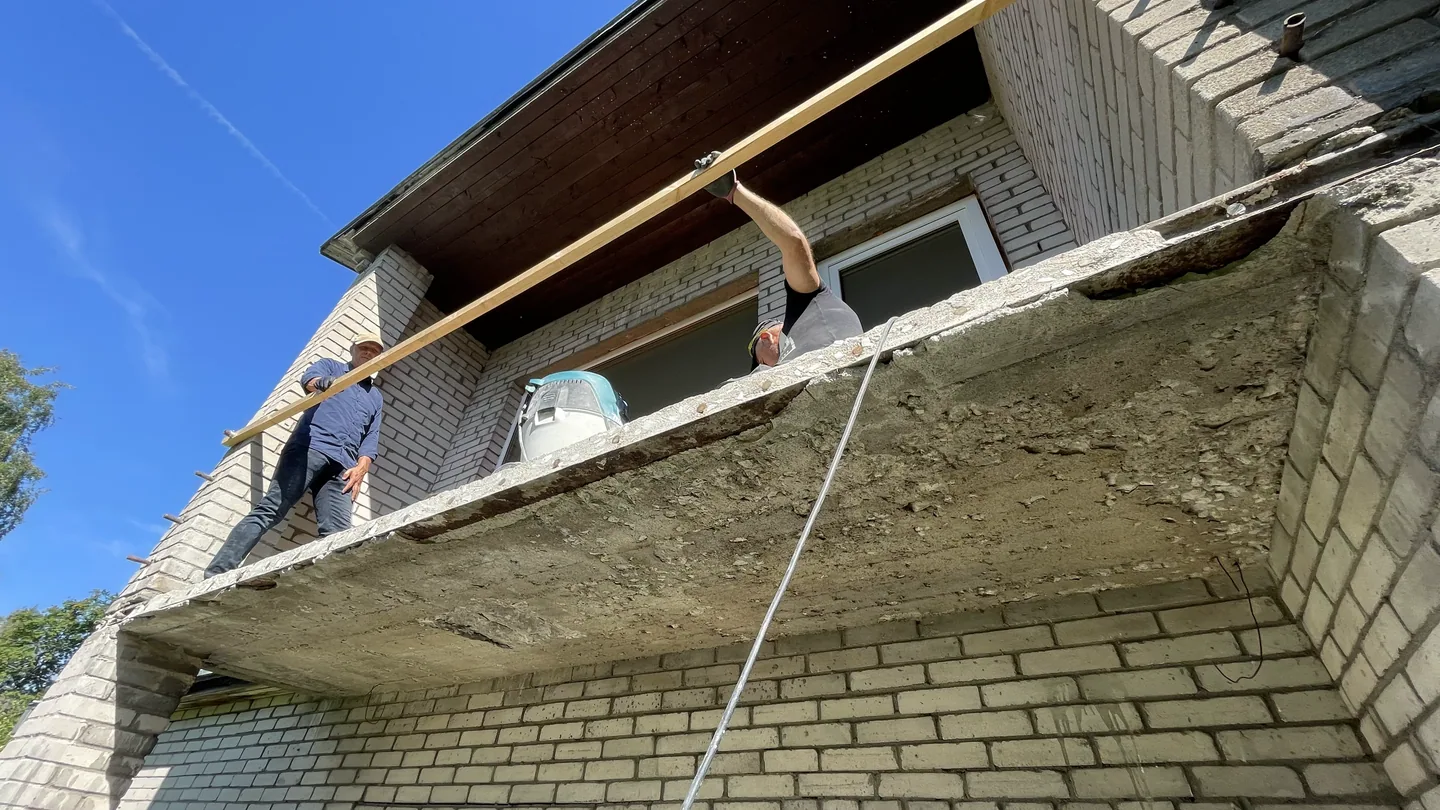
A rust-brown line has appeared below the balcony edge, and small pieces of concrete are found beside the building in spring. These can look like finish defects. They may also mean that water has reached the concrete and the layer protecting the reinforcement no longer performs as intended.
An apartment association is not expected to diagnose a structure from a photograph. Its board should, however, recognise when routine maintenance is no longer a proportionate response.
Seven signs worth recording
- Concrete is flaking or sounds hollow when checked by a specialist. The detached area may be wider than the visible edge.
- Rust stains or brown run marks. They can trace water moving near reinforcement or metal fixings.
- Long or growing cracks. Their location matters, especially at the slab edge, railing fixings and wall junction.
- Exposed reinforcement or another steel part. The metal is no longer protected from the environment by concrete.
- A persistently damp soffit. The visible wet patch may be some distance from the entry point.
- A loose railing or damaged fixing. Do not shake it hard to test it; pass the concern to a competent specialist.
- Standing water on the balcony floor. A backfall or blocked outlet keeps the structure wet and increases freeze-thaw exposure.
One symptom does not define the repair. A combination of signs, visible change over time, or falling material makes the matter more urgent.
Why paint alone is not a repair
A new coating may make the surface look even for a while, but it does not remove weak concrete, stop the water path or restore protection around reinforcement. If an unstable layer remains below, the new finish can detach with it.
The starting point is to establish the cause and extent: where water enters, how far the deterioration runs, and what condition the concrete, reinforcement, railing and fixings are in. Only then can the team decide between a local repair and a coordinated solution across a row of balconies.
When to close the area immediately
If concrete has already fallen, a loose section hangs from the slab, or a railing fixing appears unreliable, physically close the area below. A warning sign alone does not prevent someone entering the drop zone. Balcony use should stop until a competent person has assessed the condition.
TTJA advises checking other balconies in the building when a defect is found on one. Similar construction, age and exposure mean that a defect may not be isolated.
Checklist for the KÜ board
- photograph every balcony from the same positions and add the date;
- record fallen material, cracks, rust marks and damp areas;
- compare with an earlier survey rather than only with the next balcony;
- establish an exclusion zone where something may fall;
- gather old drawings, repair invoices and residents’ reports;
- commission an engineer’s review or audit when safety is uncertain;
- request prices against the same defined scope.
Good records do not replace an engineering assessment, but they make change visible and decisions more defensible. The costly mistake is to dismiss a visible warning as cosmetic without checking it.