Why mold by a balcony door matters — and where the moisture comes from
Mold is more than a dark mark on a finish. It signals persistent moisture, can irritate the airways, and will return if the source is not corrected.
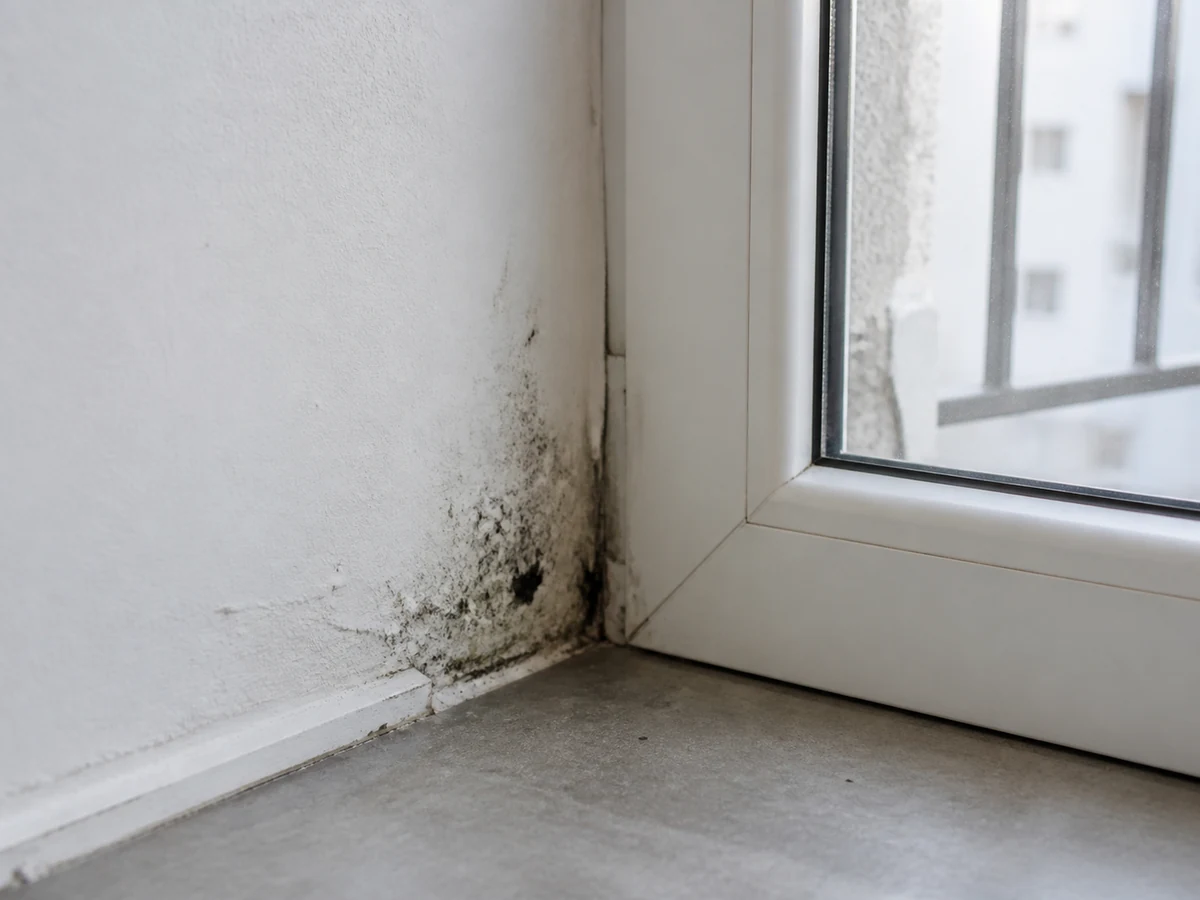
A musty smell develops by the balcony door, the lower corner darkens, and the mark becomes clearer after rain or cold weather. This is not merely a finish defect: mold means that a surface remains damp long enough for microorganisms to grow.
A cleaning product may remove the visible layer. If moisture continues to arrive through a leak, condensation, or a cold construction detail, the mark will return.
How can mold affect health?
The World Health Organization links damp and moldy indoor environments with more frequent respiratory symptoms, allergies, and asthma exacerbation. The CDC also lists stuffy nose, sore throat, coughing, wheezing, burning eyes, and skin rash as possible reactions.
People respond differently. Asthma, significant allergies, chronic lung disease, or a weakened immune system warrant particular care. Persistent health symptoms should be discussed with a clinician; the moisture source needs assessment by a building specialist.
Colour alone does not establish the level of risk. Black, green, or brown growth cannot be assigned a health category by appearance. Persistent dampness, the affected area, and occupants’ health matter more. The CDC does not recommend routine mold-type testing as a substitute for correcting moisture.
Why does mold often appear by a balcony door?
High indoor humidity. Cooking, showers, and drying laundry add moisture. Poor air exchange lets it condense on the coldest surface. The Estonian Health Board gives 35–60 percent as a general indoor relative-humidity range.
A thermal bridge. The balcony slab, threshold, or reveal may cool the interior surface more than neighbouring areas. A local surface can reach the dew point even while the room temperature is normal.
Water entering from outside. A failed junction, wrong fall, crack, or leaking threshold allows rain and thaw water into the build-up. The visible mark may be some distance from the entry point.
These causes can overlap. A cold detail may cause winter condensation while a damaged external junction adds water during wind-driven rain.
What should be checked before cleaning and repair?
- photograph the mark from the same position and note rain, wind, and frost;
- record temperature and relative humidity over several days;
- compare apartments and balconies on the same facade;
- inspect the threshold, joints, outlet, slab edge, and wall-floor corner;
- do not cover a damp construction with a new finish;
- involve a safe-remediation specialist if the affected area is extensive;
- commission an assessment if the mark returns or the cause is unclear.
What provides a lasting solution?
Stop the water source first, dry the construction, remove affected material safely, and only then restore the finish. Air exchange requires ventilation expertise; leaks, thermal bridges, and damaged concrete require an engineer or competent building specialist.
The useful question is not “what paint will hide it?” but “why does this junction stay damp?”. Without that answer, a new finish conceals only the symptom.