How water damages a balcony and contributes to mold
A leak rarely remains one damp patch. Water moves through layers, accelerates corrosion and freeze-thaw damage, and keeps cold internal surfaces damp.
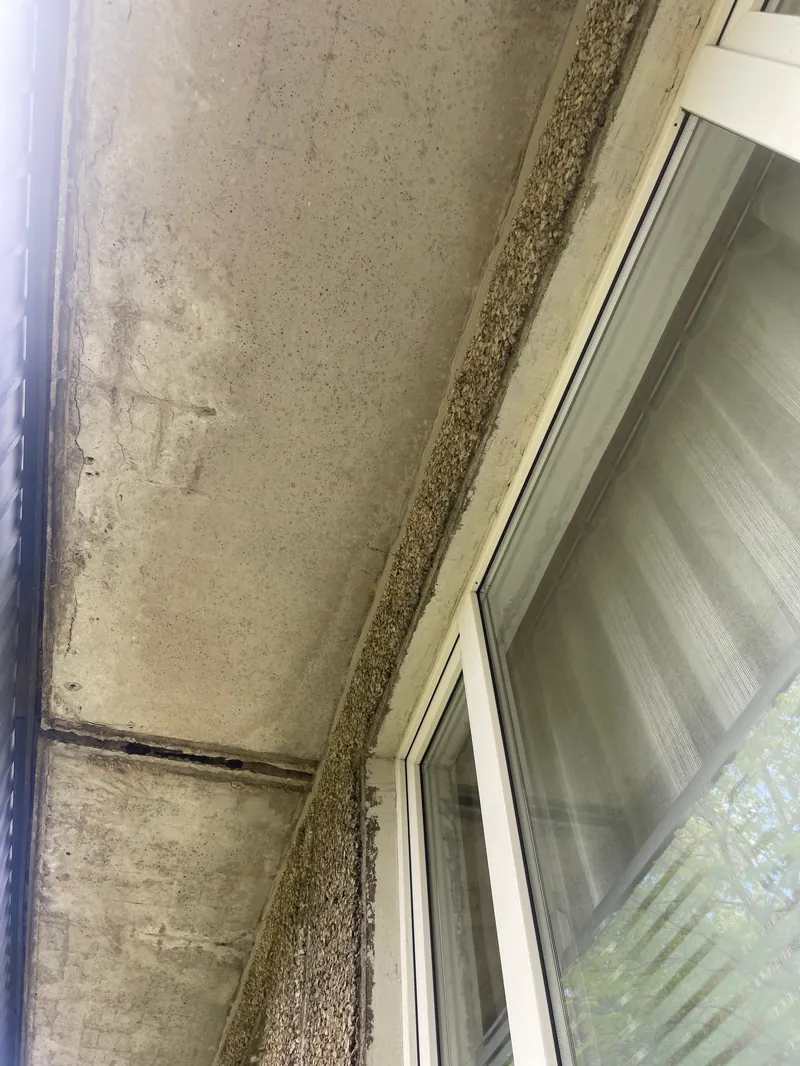
After heavy rain, a dark patch appears on the ceiling of the balcony below. It is tempting to search directly above it for a hole. Water rarely travels through a balcony in such a straight line. It can move below a finish, along a crack or through the wall-floor junction before appearing at the weakest point.
That is why a leaking balcony starts with observation, not a random bead of sealant or another coating on top.
Details that alter the water path
Fall and drainage. Water should move away from the building to a working outlet. A hollow, backfall or blockage keeps the structure wet for longer.
Wall-floor junction. Horizontal and vertical surfaces respond differently to movement and temperature. A rigid or interrupted junction may not tolerate that movement.
Door threshold. A low threshold, failed seal or incorrect build-up can direct water towards the interior.
Slab front edge. If the drip detail is damaged, water can turn onto the soffit and move towards cracks and reinforcement.
Railing and other penetrations. Every item passing through the finish needs a continuous detail that can accommodate movement.
How water damages the construction and creates conditions for mold
Water enters pores and cracks in concrete. Repeated freezing and thawing can enlarge deterioration. Once moisture reaches reinforcement, it supports corrosion; the expanding corrosion products create internal pressure and push the concrete cover away.
The indoor effect looks different. A damp threshold, reveal, or corner remains cold and wet for longer. With insufficient air exchange, indoor moisture condenses more readily on that surface and mold can grow. A leak and the indoor climate should therefore be checked together rather than selecting one convenient explanation in advance.
A rain observation the association can make
Photograph the balcony before ordinary heavy rain, during it and a few hours later. Note:
- where water first gathers;
- whether the outlet drains;
- which junction remains damp longest;
- when the soffit darkens;
- whether wind direction changes the pattern.
Do not pour a large amount of test water where damaged concrete or electrical installations are present below. The aim is to describe behaviour, not add avoidable loading.
Why another layer on a damp substrate can fail
Adhesion depends on substrate strength, cleanliness and moisture. A moving crack, weak concrete or unstable old layer remains a defect below the new finish. Interruptions at the threshold, edge and outlet remain too.
A typical sequence is to remove weak layers, assess concrete and metal, reinstate the required fall, resolve penetrations and junctions, and only then form the continuous waterproofing and protective build-up. The exact system depends on the construction and the relevant technical instructions.
Checklist for the KÜ board
- combine residents’ reports on one drawing or photo record;
- photograph the same balcony in dry weather and rain;
- consider fall, outlet, threshold, edge and penetrations as one system;
- do not order only repainting of the visible patch;
- ask how the wall-floor corner and front edge are detailed;
- require photographs of concealed stages before the next layer;
- agree the completion check and maintenance requirements.
A robust repair is not simply water-resistant paint. It is a continuous set of details that takes water away from the structure and accommodates the movements the balcony experiences.